
Generation Inclusion? – A Working Conference

For four decades, researchers have been exchanging ideas at the IFO Conference.
The Salzburg IFO team is delighted to invite you to the 40th Annual Conference on Inclusion Research in Salzburg. The conference will take place from 10–12 February 2027 under the title Generation Inclusion? – A Working Conference.
In keeping with the conference title, we invite you to work together on topics that matter to you and to us. The central format for this collaborative work will be working forums, whose themes are to be largely defined by you. The call therefore consists of two steps. In a first „Pre-Call“, we ask you to submit topics that you would like to explore – together with colleagues you already know or have yet to meet. There are various roles for participation, which are described in more detail in the Pre-Call. In this way, we aim to connect with the spirit of the early conferences, and to take up and further develop the idea of Symposia+ initiated in Bremen.
Alongside this central format, there will also be a traditional track with the option to submit individual contributions and posters. We aim to design the poster sessions in a way that makes engaging with presenters and their topics genuinely interesting and motivating.
We look forward to your topics.







Call for Papers
As part of the Pre-Call, we invited proposals for topics for Working Forums at the 40th Annual Conference on Inclusion Research – topics that, from the submitters‘ perspective, are of central importance for the generation(s) of inclusion and their transmission. We would like to thank everyone warmly for the numerous responses.
The Pre-Call has resulted in 13 Working Forums:
1. Does Inclusion Create Language? Perspectives on Democratic Language Practice
Initiator & Moderation:
Laura Röbenack Humboldt-Universität zu Berlin
Co-Moderation: sought
2. Institutional Injustice, Sign Language Deprivation and Its Lifelong Health Consequences – Impulses for Inclusion Research
Initiators:
Katharina Pape
Prof. Dr. Sabine Fries, Landshut University of Applied Sciences
Moderation: sought
3. Shifting from Adjusting to Flourishing – A Neuroaffirmative Approach in Education and Research
Initiators:
Dr. Isabella Sasso, Martin Luther University Halle-Wittenberg
Melika Ahmetovic, Ludwig Maximilian University of Munich
Dr. Fernanda Esqueda Villegas, University of Luxembourg
Rakshita Shekhar, Independent Researcher
Moderation: sought
4. Relationship Assistance as Access to Social Participation – Friendship, Belonging and Self-Chosen Relationships
Initiator: Stefan Armoneit
Moderation: Herbert Fraydl
5. Assisted Self-Direction – Joint Decision-Making Processes in the Everyday Lives of People with Cognitive Disabilities
Initiators:
Helga Neira Zugasty
Severin Neira Zugasty
Simon Couvreuer
Niklas Kern
Moderation: sought
6. Interpretations of Violence and Their Handling from a Difference-Sensitive Perspective
Initiators:
Angelia Bengel, Goethe University Frankfurt am Main
Marlene Doktor, University of Leipzig
Anne Piezunka, TU Dresden
Lea Schäfer, Schwäbisch Gmünd University of Education
Moderation: Anne Piezunka & Marlene Doktor
7. Who Are the Subjects of Inclusion? Racialization, Dis/Ability and Graded Belonging Beyond the Category of “Migration Background”
Initiator: Christine Bayer-Borrero, PH Salzburg
Moderation: sought
8. Inclusive Education in Teacher Education
Initiator: Carla Jana Svaton, University of Freiburg
Moderation: Martin Viehauser, University of Freiburg
9. New Qualities of Inclusive Learning and Teaching: The Models of Understanding-Oriented Learning-Teaching Environments (VLL) and the Related Communication Workshops (VWS)
Initiators:
Ina Henning, PH Schwäbisch Gmünd
Thomas Rihm, PH Heidelberg
Moderation: Sven Sauter, PH Ludwigsburg
Confirmed as discussants:
Birgit Hüpping, PH Ludwigsburg
Damaris Knapp, PH Schwäbisch Gmünd
Monika Miller, PH Ludwigsburg
Vera Moser, University of Frankfurt am Main
Ada Sasse, HU Berlin
Lea Schäfer, PH Schwäbisch Gmünd
10. Inclusive Pedagogy and Didactics in Technical-Design Subjects
Initiators:
Timo Finkbeiner, KPH Vienna/Lower Austria
Annett Steinmann, University of Leipzig
Moderation: sought
11. Inclusive Media Work – People with Disabilities in Journalism, Radio, Presenting and Film
Initiators:
Alexander Breyer (Radio PARADIES)
Antonia Bögner (NA (JA) GENAU)
Ernst Tradinik (MENSCHEN & MEDIEN)
Lukas Adler (Radio PARADIES)
Marcell Vala (NA (JA) GENAU)
Moderation: from the team
12. Generation Inclusion at the University – Cooperation on the Shared Object in Study, Teaching, Research and University Development
Initiators:
Cornelia Müller Bösch, HfH Zurich
Cathrin Reisenauer, PH Tirol
Irina Bühler, FHNW
Sophie Bleuel, HfH Zurich
Bettina Dimai, PH Tirol
Cornelia Maccabiani, Institut Unterstrass at PHZH
Andrea Raggl, PH Tirol
Karin Terfloth, AWZIB, Heidelberg
Moderation: from the team
13. Participation in Inclusion Research
Initiator: Bernadette Gruber (Projects IDEAL4.0 & INLAB)
Moderation: sought
With this call, we would like to bring these thematic clusters back into dialogue: you are invited to actively participate in one or more of the Working Forums listed above – as a discussant/contributor, as a moderator, or as a participant without a declared role. The forums take place simultaneously on three different days, each lasting 1 to 1½ hours, and thus extend across the entire conference.
In addition, it is now possible to submit your own poster or individual contributions.
Final Call for Submission of Poster or Individual Contributions
The guiding question Generation Inclusion? points to a twofold tension: on the one hand, inclusion stands for the recognition of equality and difference as inseparable foundational principles of democratic educational processes (Dewey, 2011; Prengel, 2019; Hinz, 2023). On the other hand, the concept of generation points to a tension between continuity and change, and thus to a foundational – if not the – pedagogical relationship (Mollenhauer, 2008): the question of whether different actors in the development of integration and inclusion form a shared context of experience and knowledge, and what, if anything, should be passed on and preserved from it. Or whether, rather, disparate, historically shaped generations with their own patterns of interpretation and visions of the future stand side by side – that is, whether the situatedness (Fleck, 2023) of the actors is what first brings the subject matter into being. The working conference is therefore interested in how the generations of inclusion constitute themselves, what bodies of knowledge they produce, and what means of addressing tasks or visions of the future for an inclusive democratic society emerge from this.
In doing so, the conference builds on central theoretical traditions of inclusion research. Inclusion is understood as a permanent engagement with dialectical relationships (e.g., Wocken, 2021) – for example, the relationship between equality and difference. People have an equal right to equality in the sense of equal dignity, equal rights and equal opportunities for participation, as well as a right to recognition of their individual and social difference. Education in and for inclusive democratic societies is thus faced with the challenge of neither playing equality and difference off against one another nor dissolving one in favor of the other, but rather placing both in a productive and social relationship (Dewey, 2011). The question of belonging, recognition and participation thus proves to be not only a pedagogical question but also a social, cultural and historical one. There is an extensive and differentiated body of critical inclusion research on this (Feuser, 2017; Jantzen, 2007; Ellger-Rüttgart, 2024).
Against this background, sociological generational research opens up an additional perspective on the development and future of inclusion. Generations are understood not primarily as biologically or demographically defined age groups, but as historically emerged communities of experience (Mannheim, 1964), shaped by shared participation in social, political and cultural transformation processes. On this basis, generations develop specific patterns of interpretation, orientations for action and visions of the future – they are situated. The question of a Generation Inclusion therefore directs attention to the different generational contexts that have been shaped by the developments of integration and inclusion, by the emancipation and disability rights movements, particularly decisively by the UN Convention on the Rights of Persons with Disabilities, as well as by educational and social policy transformation processes of recent decades (see e.g. Müller 2018–2023). An important approach to the historical classification of these developments is offered by the reconstruction of integration and inclusion research (e.g., Moser, 2017). It shows that German integration research has, since the 1980s, not only produced fundamental empirical findings on the joint learning of children with and without disabilities, but has also been substantially involved in the theoretical redefinition of disability, education and participation. In this process, research questions shifted from enabling joint upbringing and education increasingly toward analyses of participation, recognition, barriers and institutional transformation processes. The history of integration and inclusion research can therefore itself be read as a historical process of different styles of thought and situatednesses – an observation that can also be applied to the present conference itself: its own, now 40-year history is likewise an expression of changing generations and their perspectives and interests, which should be reflected upon as part of this anniversary.
In addition, Disability Studies have significantly shaped the inclusion debate (Dederich, 2015) by analyzing disability not primarily as an individual characteristic, but as the result of societal orders, norms and barriers. This shifts the focus from the adaptation of individual persons to existing conditions toward a critical examination of those societal conditions that enable belonging or produce exclusion. Disability Studies thus once again open up a power-critical perspective on the question of which voices were heard in the different phases of the integration and inclusion movement, what bodies of knowledge emerged, and which forms of exclusion continue to have an effect today. In particular, the perspectives of self-advocates and experts by experience form an independent body of knowledge and experience that cannot be dissolved within the conventional scientific framework of interpretation, but rather independently challenges and expands it. This also raises the question of the relationship between scientific and experience-based knowledge production: while participatory research includes those affected as co-researchers in scientifically initiated processes, emancipatory research (Oliver, 1992) goes a step further and understands those affected as initiators and persons responsible for their own research agendas, to which scientific expertise is subordinated. Both approaches raise the question of whose knowledge counts as legitimate in inclusion research – and, in keeping with the conference theme, the question also arises as to how this understanding has shifted across generations, or will (have to) shift in the future.
These questions must also be considered in relation to intersectional perspectives (Walgenbach, 2017): experiences of exclusion and belonging are produced not only through disability, but in interrelation with other lines of difference such as racialization, gender, socioeconomic status or neurodivergence – something that integration theory already reflected on in the 1990s (Prengel 2019; Preuss-Lausitz 1993). Here, too, the question of generations arises: how is disability negotiated in current inclusion research with regard to other dimensions of inequality, and how are these related to one another?
Finally, the question of generations of inclusion cannot be separated from the current social and political situation. Increasing social polarization, a Europe-wide shift to the right, as well as wars and crises are once again calling democratic and inclusive education into question, in a changed form (Giroux, 2022; West, 2005). Against this background, we want to discuss not only what Inclusive Pedagogy was and is, but also what it must be and become in light of these intensified conditions – and what role the different generations of inclusion research, self-advocacy and pedagogical practice each have to play in this.
The task of the working conference – in brief: We want to explore the question of whether a “Generation Inclusion” can be described that has been shaped by shared practice and experience with the integration and inclusion movements of recent decades, or whether, rather, different generations of inclusion exist, each with their own bodies of knowledge, lines of conflict, visions and ideas for the future. This simultaneously brings to the fore the question of how conceptions of the core concepts of inclusion research and their accepted methods have changed across different generations, and led to programmatic changes. And finally: how can this transformation process be reasonably shaped by the actors themselves, and what does this mean in view of the standards of scientific rigor, human rights, participation/inclusivity and transformation demanded by the field?
Beyond the Working Forums already confirmed, it is possible to submit your own poster or individual contributions. For thematic orientation, these contributions ideally connect to one or more of the following guiding questions of the conference:
- How do continuity and change relate to one another when different generations of inclusion research and the inclusion movement look back on shared roots but look to the future with their own patterns of interpretation? How is a generation’s own situatedness expressed in light of enduring questions of inclusion?
- How have the subjects of inclusion – self-advocates, professionals from practice and research, policymakers – understood themselves over recent decades, and how do they understand themselves today?
- What was, is, and could Inclusive Pedagogy be, given the changed global situation and intensified societal conditions, and how is its field of subject matter now constituted?
- What historical lines of development in inclusion research can be traced, critically questioned or continued on the occasion of the conference’s 40th anniversary?
- What experiences, orders of knowledge and guiding conceptions connect or distinguish those who shaped the integration movements of the 1970s and 1980s from those whose self-understanding has been influenced by the UN Convention on the Rights of Persons with Disabilities, Disability Studies, diversity discourses and current participation debates?
Contributions that draw on the framework theme but set an independent focus running across it are also explicitly welcome. The decisive criterion for acceptance is the relevance of the contribution to the field of inclusion research and practice.
We ask that you submit a title and abstract (max. 2,000 characters) by 15 September 2026 via this form for submition of poster or individual contributions
Participation in the Working Forums
Independent of a submission, it is possible to register for one of the Working Forums listed, and, as an alternative, for a second one. The following forms of participation are available:
Discussant/Contributor – active participation in a Working Forum, contributing one’s own expertise, perspectives and experiences,
Moderator – accompanying and structuring the working process within a forum,
Participation without a declared role – participation in the open program items of the conference as well as in Working Forums without taking on an active task.
All forms of participation are equally welcome and stand on equal footing. The roles of discussant/contributor and moderator in the Working Forums count as active roles and can be documented accordingly to one’s respective institution. Registration takes place centrally via the link below by 30 September 2026, and is independent of any submission of one’s own poster or individual contribution, or of participation in the Working Forums.
Ainscow, M., & Miles, S. (2008). Making education for all inclusive: Where next? Prospects, 38(1), 15–34. https://doi.org/10.1007/s11125-008-9055-0
Dederich, M. (2015). Körper, Kultur und Behinderung. transcript.
Dewey, J. (2011). Demokratie und Erziehung. Beltz.
Ellger-Rüttgart, S. (2024). Geschichte der Sonderpädagogik. UTB.
Feuser, G. (2017). Inklusion – Das Mögliche, das im Wirklichen noch nicht sichtbar ist. In G. Feuser (Hrsg.), Inklusion – ein leeres Versprechen? (S. 183-186). Psychosozial-Verlag.
Feuser, G. (2011, 23. Februar). 25 Jahre Integrations-/Inklusionsforschung – eine kritische Stellungnahme. Prof. Dr. Georg Feuser. https://www.georg-feuser.com/25-jahre-integrations-inklusionsforschung-eine-kritische-stellungnahme/
Fleck, U. (2023). Entstehung und Entwicklung einer wissenschaftlichen Tatsache. Suhrkamp.
Giroux, H. 2022. Pedagogy of Resistance. Bloomsbury.
Hinz, A. (2023). Inklusive und demokratische Bildung: Überlegungen zur intersektionalen Revitalisierung der Inklusionsdebatte. Zeitschrift für Inklusion, 3. https://www.inklusion-online.net/index.php/inklusion-online/article/view/703
Jantzen, W. (2007). Allgemeine Behindertenpädagogik. Lehmanns.
Mannheim, K. (1964). Das Problem der Generationen. In K. Mannheim, Wissenssoziologie. Auswahl aus dem Werk (S. 509–565). Luchterhand. (Originalarbeit veröffentlicht 1928)
Mollenhauer, K. (2008). Vergessene Zusammenhänge. Juventa.
Moser, V. (2017). Historische Kontextualisierungen der Integrations- und Inklusionsforschung in der Bundesrepublik Deutschland. In J. Budde, A. Dlugosch, & T. Sturm (Hrsg.), (Re-)Konstruktive Inklusionsforschung: Differenzlinien – Handlungsfelder – empirische Zugänge (S. 21–32). Verlag Barbara Budrich.
Müller, F.J. (2018/2023) (Hrsg.) Blick zurück nach vorn – WegbereiterInnen der Inklusion. 3 Bde. Psychosozial-Verlag.
Oliver, M. (1992). Changing the social relations of research production? Disability, Handicap & Society, 7(2), 101–114.
Prengel, A. (2019). Pädagogik der Vielfalt: Verschiedenheit und Gleichberechtigung in interkultureller, feministischer und integrativer Pädagogik (4., um ein aktuelles Vorwort ergänzte Aufl.). Springer VS. https://doi.org/10.1007/978-3-658-21947-5
Preuss-Lausitz, U. (1993). Die Kinder des Jahrhunderts: zur Pädagogik der Vielfalt im Jahr 2000. Beltz.
Waldschmidt, A. (2007). Disability Studies, Kultursoziologie und Soziologie der Behinderung. In A. Waldschmidt (Hrsg.), Disability Studies, Kultursoziologie und Soziologie der Behinderung (S. 9–28). Transcript.
Walgenbach, K. (2017). Heterogenität – Intersektionalität – Diversität. UTB.
West, C. (2005). Democracy Matters. Penguin.
Wocken, H. (2021). Dialektik der Inklusion. Feldhaus.
Ziemen, K. (2013). Kompetenz für Inklusion: Inklusive Ansätze in der Praxis umsetzen. Vandenhoeck & Ruprecht.
Submission of Poster or Individual Contributions
In addition to the Working Forums, it is now possible to submit your own poster or individual contributions that are not directly assigned to one of the Working Forums listed above. Please submit a title and abstract (max. 2,000 characters) by 30th September 2026 via the link below.
Form for submition of poster or individual contributions
Deadlines at a Glance
- Confirmation of discussant/moderator for a Working Forum: 30 September 2026
- Submission of poster/individual contribution: 30 September 2026
- Notification of acceptance of contributions: 17 November 2026
- Conference Registration: Starting 20 September 2026
- Conference: 10–12 February 2027, PH Salzburg Stefan Zweig
Pre-Call
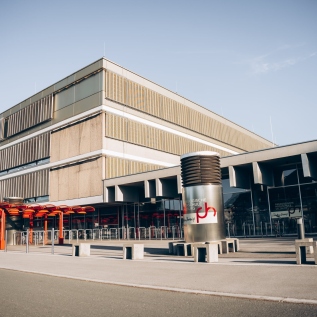
The 40th Annual Conference on Inclusion Research aims to offer a space, on the occasion of its anniversary, to draw a connection back to its beginnings. With this perspective in mind, we would like to work together on how the subjects of inclusion have understood themselves, how they understand themselves today, and how they wish to define (themselves) in the future – and, relatedly, what Inclusive Pedagogy was, is, and could be and become in light of a changed world and increasingly challenging social conditions. We have therefore given the overarching theme the title Generation Inclusion? and wish to hold a working conference at the University of Education Salzburg Stefan Zweig.
We invite all those affected by, addressed by, or engaged with the topic of inclusion:
- Self-advocates and experts by experience,
- Family members and close associates,
- Teachers, social educators and disability educators,
- Open-minded, interested professionals,
- Representatives of academic Inclusive Pedagogy and its related disciplines,
- Researchers and activists, as well as
- Advocacy and political representatives,
…to work across generations on the self-understanding and therefore the future of inclusion in the fields of education, child-rearing, and social services.
In our view, the aim of a working conference requires that collaborative partners be involved from the very beginning. That means you – all of you. This already hints at the fact that this conference will need to deviate from the „usual“ format. The idea for the framework of our collaborative work is as follows:
We would like to structure the conference around working forums as the central format. These form the focal point of the annual conference.
Characteristics of the Working Forums
- They extend across the entire duration of the conference.
- They serve the purpose of collaborative, in-depth work on a specific topic.
- The goal is to initiate lasting collaborative relationships beyond the conference itself (e.g. publication projects, research networks, project ideas).
Roles in the Working Forums
There will be various ‚roles‘ within the forums, which we would like to define – not exhaustively – as follows. All of them are recognised as active, confirmable roles for collaborative work within the conference.
Impulse Givers
- Propose a topic for a working forum and/or
- Provide a thematic impulse to introduce an existing topic,
- Co-structure the work process together with the moderators,
- Are available for substantive work on the topic throughout the conference.
The role of Impulse Giver is considered a presenting and leading role and can be formally documented to the relevant organisation.
Discussants / Active Contributors
- Actively participate in a working forum,
- Contribute their own expertise, perspectives, and experiences,
- Engage continuously in the work process.
The role of Discussant or Active Contributor is considered active professional participation in the working conference and can be formally documented to the relevant organisation.
Moderators
- Accompany and structure the work process within the forum,
- Support focused, participatory discussion,
- Contribute to the documentation and continuation of results.
The role of Moderator is also considered an active, responsible role within the conference and can be formally documented to the relevant organisation.
Participation without a Declared Role
Participation in the annual conference is also possible without taking on a specific role. Participants without a declared role may attend the open parts of the conference and visit working forums as well as all other programme items.
Announcement of the Topics
We ask all Impulse Givers to submit by 5 July the topics they wish to address – topics that are, in their view, essential and centrally significant for the generation(s) of inclusion and their continuation.
Before the summer break (expected by 17 July), we will reintroduce the topics into dialogue via a final Call, and will concretise participation and collaboration on the thematic clusters – and, with your support, (pre-)structure the framework for our collaborative work. At that point, it will also be possible to submit poster or individual contributions.
Pre-Call for Impulse Givers
If you – as an individual or group – would like to provide an impulse for a working forum, please fill in the following form by 5 July:
For all other participants, the Call to be sent out in mid-July will be the relevant communication.
Accesibility and Awareness
We are committed to making the IFO Conference at the University of Education Salzburg as accessible and inclusive as possible. Our fundamental approach, as well as the concrete structures of the conference, are summarised in a comprehensive Awareness Concept.
Our concept is based on the Awareness Concept of IFO Bremen 2026, which the conference team developed in collaboration with the ADE of the University of Bremen. We have adapted this template to best meet the needs of our conference community at the University of Education Salzburg. We would like to sincerely thank our colleagues at the University of Bremen for their generous provision of materials, and we are very pleased to be able to build on the foundation of their valuable work.
We are consistently committed to implementing participation with as few barriers as possible across various dimensions.
- Individual needs: You can already inform us of your personal needs (e.g. childcare, quiet spaces, specific assistance requirements) as part of the registration process or by emailing ifo@phsalzburg.at.
- On-site support: Throughout the entire conference, contact persons will be available to assist with any support needs that arise.
We are all jointly responsible for a mindful, respectful, and accessible environment. The preparation of talks, workshops, and posters also contributes significantly to an accessible conference experience.
Getting involved together: We warmly invite all participants to read the Awareness Concept in advance, so that we can bring it to life together during the conference.
Our concepts in plain language and easy-to-read formats will appear here.
Everything about the Conference
Registration Fee
Getting to Salzburg
Salzburg W.A. Mozart Airport
Salzburg W.A. Mozart International Airport is served daily by numerous direct international flights. The airport is located approximately four kilometres west of the city centre. Bus line 2 takes you to the main train station, and bus line 10 takes you into the city centre. Buses run every 10 minutes during the day and every 20 minutes in the evenings. Tickets can be purchased at machines or via the „SalzburgMobil“ app. Taxis are also available.
There is also the option of booking a pick-up service from „Salzburger Mietwagen und Reise-Service GmbH“. This service will take you from the airport to an address of your choice in Salzburg. This service must be booked three working days in advance.
If no direct flight to Salzburg is available, Vienna or Munich are good alternatives. Onward travel to Salzburg is possible via Austrian Federal Railways (ÖBB), Deutsche Bahn (DB), or Westbahn.
By Train
Due to its location, Salzburg is easily accessible by train. Salzburg Main Station is situated in close proximity to the city centre. Many local and regional buses stop in the forecourt of the station (5:00 to 23:30).
By Car
Austria’s motorway network provides the best connections to Salzburg by car. The A1 West Motorway from Vienna via Linz approaches from the east. The A8 (Munich, Germany / Innsbruck, Austria) approaches from the west, and the A10 Villach/Graz arrives from the south (Italy and Slovenia).
Please note that a motorway vignette is compulsory on Austrian motorways. Further information: https://www.oeamtc.at/thema/maut-vignette/
Public Transport
Salzburg’s public transport system is very well developed. All major districts are accessible by one of the environmentally friendly city buses. Bus stops are clearly signposted. Single tickets must be validated at the ticket machine on the bus before each journey. Weekly and monthly passes need to be validated once only.
Further information: https://salzburg-verkehr.at/
You can reach our campus by taking bus lines 3, 5, 8 or 27 heading south. Our stops are „Akademiestraße“ (lines 3, 8), „Erzabt-Klotz-Straße“ (line 5) or „Sportzentrum Nonntal“ (line 27).
The Salzburg Transport Service Centre is located in the basement of Salzburg’s local train station at Südtiroler Platz. There you can purchase tickets, obtain information, and pick up additional materials.
Taxis in Salzburg: Simply call 8111.
Tourist Information: Salzburg Tourism, Mozartplatz 5, 5020 Salzburg | www.salzburg.info | www.visit-salzburg.net
Catering at the Conference and Conference Dinner
During the conference, exclusively vegetarian and vegan food will be provided.
The conference dinner will take place at Restaurant ‚Mephisto‘, which is within walking distance of the University of Education Salzburg Stefan Zweig. Erzabt-Klotz-Straße 22, 5020 Salzburg | www.mephisto-salzburg.at
Restaurant Recommendations
- ARGE Beisl
- Augustiner Bräu
- The Green Garden
- Frida Bistro (in the Künstlerhaus)
- Casa d’Antonio
Accommodation
Room contingents have been arranged at the following hotels for conference guests. We ask all guests to make their own reservations.
Motel One Salzburg Süd
Website: https://www.motel-one.com/en/hotels/salzburg/
Email: salzburg-sued@motel-one.com
Dates: 9–12 February 2027
Rate: EUR 100.45 per night, single room incl. breakfast and city tax
Booking code: PÄD090227
Availability until: 5 January 2027
Cocoon Salzburg
Website: https://cocoon-hotels.com/de/cocoon-salzburg/
Email: salzburg@cocoon-hotels.at
Dates: 9–12 February 2027
Rate: EUR 111.00 per night, single room incl. breakfast, excl. city tax
EUR 140.00 per night, double room incl. breakfast, excl. city tax
Booking code: IFO-Tagung PH Salzburg
Availability until: 9 December 2026
Castellani Salzburg
Website: https://castellani.arcotel.com/de/
Email: reservation.castellani@arcotel.com
Dates: 9–12 February 2027
Rate: EUR 130.00 per night, single room incl. breakfast, excl. city tax
Booking link: https://reservations.travelclick.com/9877026?groupID=5267121
Availability until: 9 December 2026
Further Hotel Recommendations
BIDOK

bidok is an information and knowledge-sharing platform based in Innsbruck, Austria, that develops and implements a range of projects on disability and inclusion. For almost 30 years, bidok has supported and documented the annual conferences of inclusion researchers (IFO). Visit our website or our accessible digital library, bidokbib!
Mailing List for Inclusion Researchers
The mailing list connects researchers working on inclusion and is used to share job vacancies, announcements of conferences and other events, and calls for papers. It has more than 600 subscribers and is managed by bidok.
To subscribe to the mailing list, please click the button below. First, enter your first name, followed by your last name. A blank email will then open. Send this email to be automatically added to the mailing list.
You can unsubscribe from the mailing list yourself at any time. For instructions and further information about the mailing list (in German), click here.
bidok Newsletter
In addition to the mailing list for inclusion researchers, you can also subscribe to the bidok Newsletter here. The newsletter provides information about new publications in our accessible digital library, bidokbib, as well as other bidok projects. It also highlights conferences, initiatives and regional events.
*Please note: We send approximately 6 bidok Newsletters per year. Our email marketing provider, CleverReach, ensures that your data is processed in compliance with the GDPR (General Data Protection Regulation), a law designed to protect personal data and prevent its misuse. For further information, please see our Privacy Policy.
Scientific Advisory Board
|
Name |
Institution |
|
Ann-Kathrin (Anka) Arndt |
Univ. Kassel |
|
Gertraud Kremsner |
Univ. Koblenz |
|
Michelle Proyer |
Univ. Luxemburg |
|
Katja Adl-Amini |
TU Darmstadt |
|
Natascha Korff |
Univ. Bremen |
|
Mai-Anh Boger |
Univ. Koblenz |
|
Julia Biermann |
Univ. Innsbruck |
|
Kerstin Ziemen |
Univ. Köln |
|
Franziska Felder |
Univ. Zürich |
|
Birgit Lütje-Klose |
Univ. Bielefeld |
|
Jan Weisser |
FH Nordwestschweiz |
|
Rainer Grubich |
PH Wien |
|
David Labhart |
HfH |
|
Lisa Pfahl |
Univ. Innsbruck |
|
Tobis Buchner |
Univ. Wien |
|
Claudia Kaluza |
PH Wien |
|
Karolina Urton |
Univ. Münster |
|
Marcel Veber |
RPTU |
|
Sven Bärmig |
Univ. Halle/Wittenberg |
|
Ingo Bosse |
HfH |
|
Kathrin Müller |
Univ. Regensburg |
|
Saskia Schuppener |
Univ. Leipzig |
|
Dieter Katzenbach |
Univ. Frankfurt |
|
Thomas Hoffmann |
HU Berlin |
|
Anke Langner |
TU Dresden |
|
Anne Piezunka |
TU Dresden |
|
Markus Gebhardt |
LMU München |
|
Benjamin Badstieber |
Univ. Duisburg-Essen |
|
Phillip Neumann |
Univ. Paderborn |
|
Oliver Koenig |
Suttner Priv. Univ. St. Pölten |
|
Andreas Köpfer |
PH Freiburg |